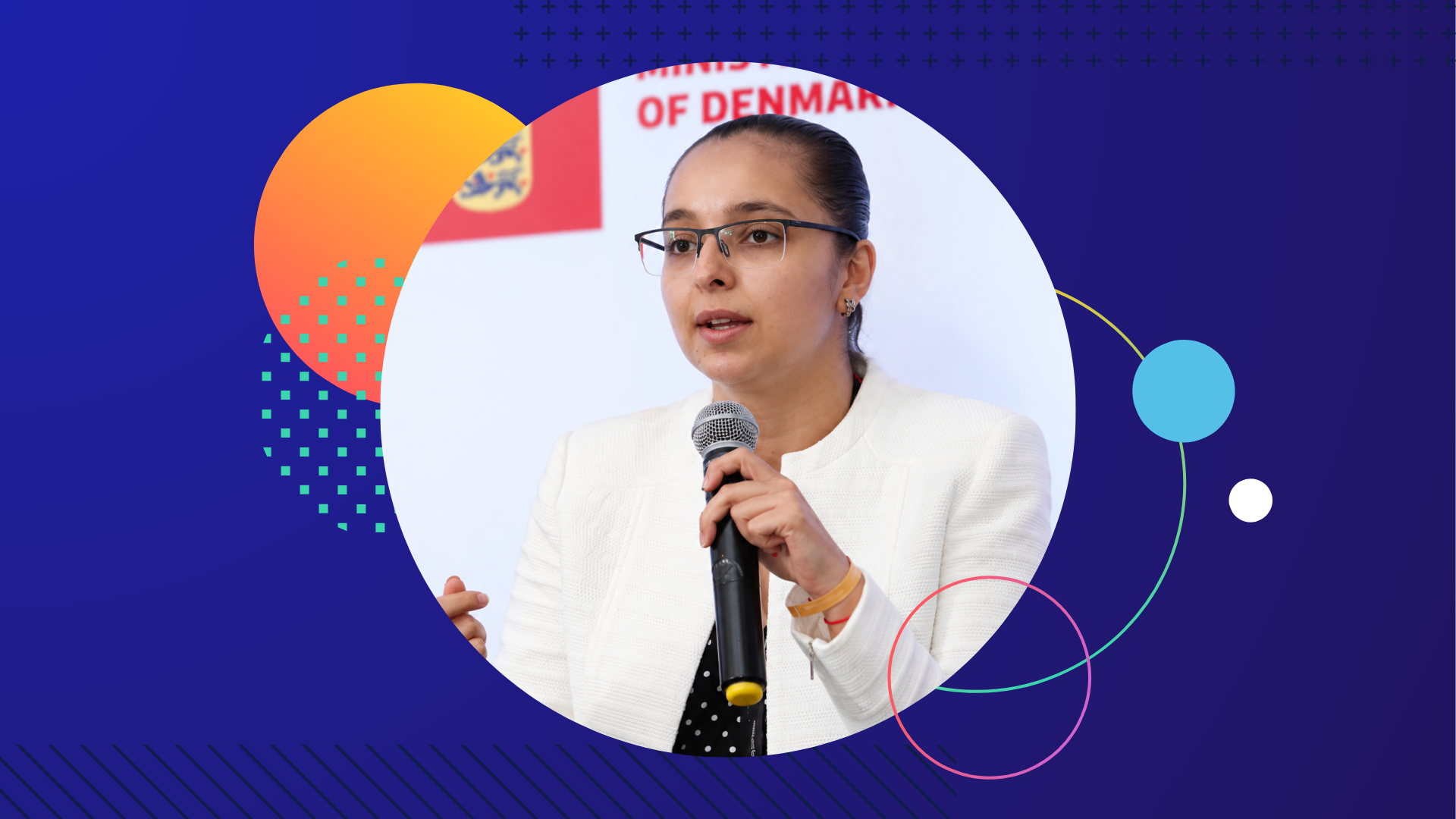
HIMSS Professional Certification Grant Member Spotlight:María Fernanda González Alvarez, MD, CPHIMS, Physician and Senior Manager, PwC México
We’re excited to feature Dr. María Fernanda González Alvarez, a recipient of the 2026 HIMSS Foundation Professional Certification Grant. In this spotlight, she shares what inspired her to pursue the CPHIMS® certification, the challenges she overcame, her international perspective on health tech and health equity, and how the HIMSS community has supported her professional goals.
María Fernanda González Alvarez is a physician and digital health leader with experience advancing healthcare transformation across Latin America, Europe, and the United States. Since 2018, her work has spanned telehealth, electronic medical records, interoperability, AI-enabled solutions, and large-scale transformation across multi-hospital healthcare systems.
She currently serves as a Senior Manager at PwC and is pursuing a specialization and master’s degree in health informatics. In 2022, she was recognized by the Inter-American Development Bank as one of 38 Women Champions in Digital Health. Dr. González Alvarez is passionate about continuous learning, mentorship, and helping healthcare systems use technology more intelligently, responsibly, and effectively to improve care delivery and patient outcomes.
Congratulations once again, Dr. González Alvarez! We at HIMSS are proud to celebrate your achievements and look forward to your continued growth and impact in the field.
For those interested in applying for the 2027 cohort of the HIMSS Foundation Professional Certification Grant for Minority Professionals and Students, be sure to visit the HIMSS Foundation website for more details. The application period is currently to open through Tuesday November 17, 2026, at 12:00 PM CT. Don’t miss the opportunity to advance your professional journey through HIMSS certification!
HIMSS: What inspired you to pursue certification in health tech?
María Fernanda González Alvarez: My path into health technology began at the intersection of clinical practice and a growing realization that many of the challenges we face in healthcare cannot be solved at the bedside alone. As a physician, I saw firsthand how technology, information, and well-designed workflows can either empower clinicians and patients or create additional barriers to care.
As my career evolved from clinical practice into telehealth, digital health product leadership, and large-scale clinical platform transformation, I increasingly found myself working at the intersection of clinical, technical, and business teams. I wanted to complement that practical experience with a recognized framework that could strengthen my understanding of health information and technology from a broader systems perspective.
I first pursued CAHIMS to formalize that foundation. Advancing to CPHIMS felt like a natural next step as my responsibilities grew into leading complex transformation initiatives, interoperability programs, digital health strategy, and clinical application ecosystems across different healthcare organizations and countries.
For me, certification is more than a credential. It represents a commitment to continuous learning and to developing the knowledge needed to translate technology into meaningful improvements in patient care, clinician experience, and healthcare system performance.
HIMSS: Can you share any challenges you've overcome while preparing for the certification?
María Fernanda González Alvarez: Preparing for the CPHIMS certification happened during a particularly dynamic period in my professional and personal development. While studying for the exam, I was also navigating a job transition and pursuing both a specialization and a master's degree in Health Informatics, commitments that I continue today. At the same time, I was continuing my French studies with the goal of progressing to a higher proficiency level, so finding the discipline and mental space to keep progressing across all of these goals was certainly challenging.
English is also my second language. Although I now work comfortably in English and much of my professional and academic environment is English-speaking, preparing for a certification at this level still requires precision with terminology, concepts, and context. It added another dimension to the process and reminded me how important adaptability and continuous learning have been throughout my career.
The grant made an important difference because it removed the financial barrier associated with pursuing the credential. That allowed me to focus on what was ultimately my responsibility: preparing, learning, and passing the exam. I saw the opportunity as something I needed to honor by putting in the work.
The experience also made me reflect more broadly on professional growth and representation. As a woman working in health technology, I still encounter spaces where women's perspectives and expertise are not as visible as they could be. I do not see that simply as a reason to point out what is missing, but as motivation to contribute more actively, to share what I have learned, mentor others, participate in professional communities, and help make different voices and experiences more visible.
For me, earning the certification was therefore not only about mastering a body of knowledge. It was also about continuing to grow into the kind of professional who can learn, lead, and help create space for others along the way.
HIMSS: How do you see health tech impacting health equity?
María Fernanda González Alvarez: I believe health technology can be one of the most powerful tools for advancing health equity, but only when equity is intentionally incorporated into how solutions are designed, implemented, and measured.
Working in Latin America has made that particularly tangible for me. Earlier in my career, I helped lead a digital health platform serving patients across the region, where telehealth and digital engagement demonstrated how technology can extend access beyond traditional healthcare settings. During the COVID-19 pandemic, we saw how quickly digital channels could scale when physical access to care became severely constrained.
That experience also taught me that technology alone does not create equity. Digital solutions can reproduce or even amplify existing disparities if we overlook factors such as connectivity, digital literacy, language, affordability, accessibility, clinical workflows, or the quality and representativeness of the underlying data.
As we increasingly introduce technologies such as artificial intelligence, advanced analytics, interoperable health records, and digital clinical workflows, I believe we have an opportunity to move beyond simply digitizing healthcare and toward making it more accessible and responsive to different populations.
The goal should not be technology adoption for its own sake. Success should be measured by whether technology helps more people receive timely, safe, high-quality care, regardless of geography, socioeconomic circumstances, or the health system they happen to navigate.
HIMSS: How has this grant, and the support from HIMSS, shaped your professional goals?
María Fernanda González Alvarez: The grant and the support I have received from HIMSS have helped me see certification not as an endpoint, but as part of a broader professional journey.
My relationship with HIMSS has evolved from earning CAHIMS to achieving CPHIMS and becoming more actively involved in the community, including serving as a reviewer, mentor, and session host for HIMSS26. Each of those experiences has given me a different perspective: first as a learner, then as a certified professional, and increasingly as someone who can also contribute, mentor, and help create opportunities for others.
The grant itself was particularly meaningful because it provided access to a credential that represents an important milestone in my development as a health technology leader. More than that, it reinforced my responsibility to make the most of the opportunity by applying that knowledge in ways that can have a broader impact.
Professionally, it has strengthened my goal of becoming a leader who can connect clinical understanding, technology strategy, and large-scale execution. I want to continue working on complex healthcare transformations where interoperability, clinical applications, AI, and emerging technologies can translate into measurable improvements for healthcare organizations, clinicians, and patients.
It has also made me think more intentionally about visibility and mentorship. Throughout my career, I have benefited from people and communities willing to share their knowledge and create opportunities for others. I want to do the same, particularly for women and emerging professionals in health technology who may not always see themselves represented in leadership, technical discussions, or professional forums.
Having worked across Latin America and Europe and now supporting healthcare organizations in the United States, I am also increasingly interested in how lessons from different health systems can inform one another. HIMSS provides a global community where those experiences and perspectives can come together.
Ultimately, my goal is not only to help implement better technology. I want to contribute to healthcare systems that use technology more intelligently, responsibly, and equitably, and to help develop a professional community where more people feel empowered to contribute their knowledge, lead, and mentor the next generation.
-
Join Us as We Reimagine Health Through Information and Technology
At HIMSS, our vision is to realize the full health potential of every human, everywhere. Be part of the community that’s transforming the global health ecosystem with courage, curiosity and determination.