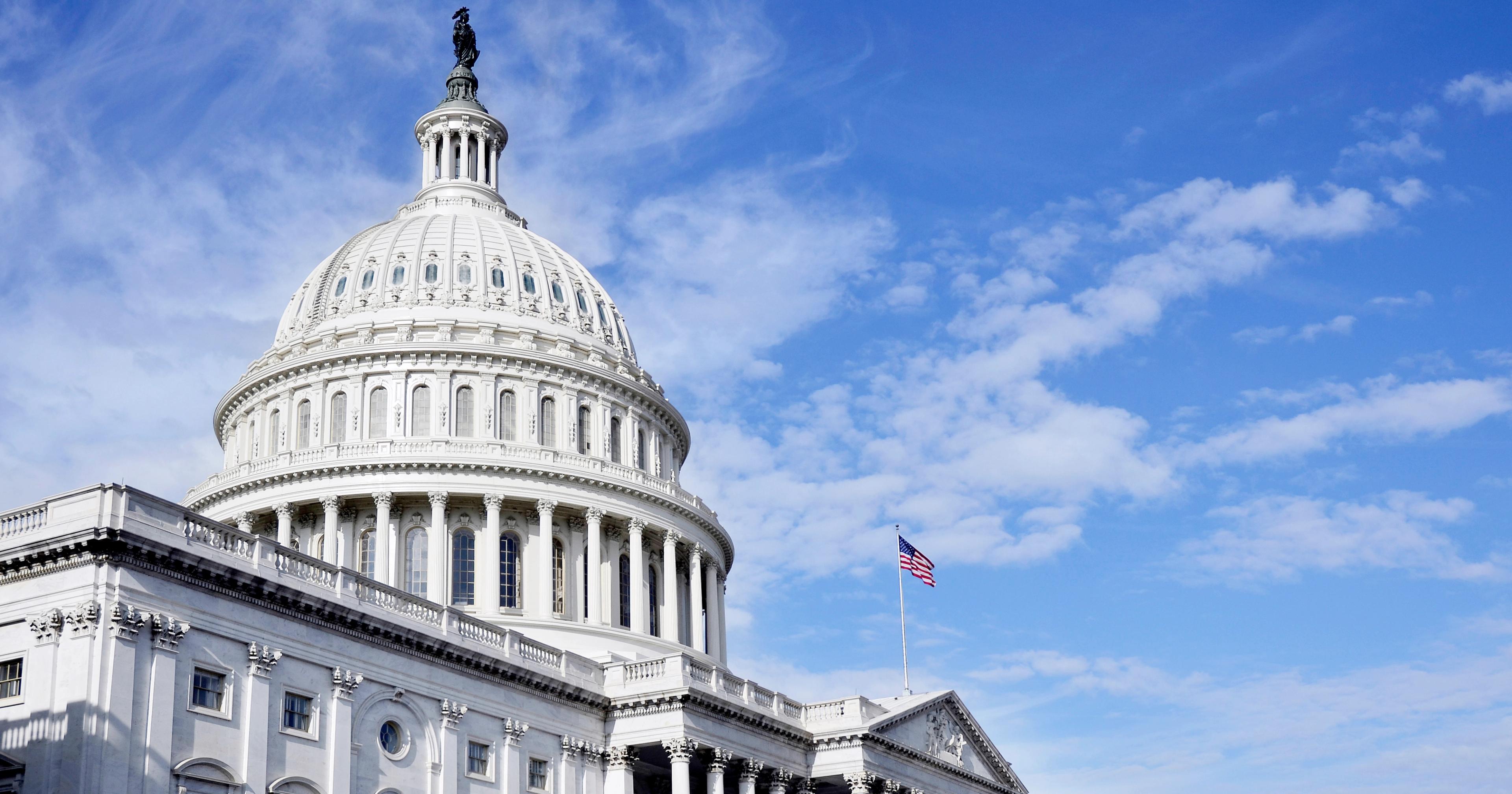
U.S. Government Shutdown Halts Funding, Extends Debate over Health and Cyber Protections
The United States government is shut down as of 12:01 a.m. Oct. 1, following congressional disagreements and policy debates that have focused heavily on healthcare.
- Update: Shutdown Pressures Mount as Healthcare Community Seeks Certainty on Telehealth and Cybersecurity
As the shutdown continues, Congress must weigh the broader fiscal debate against the urgent need to safeguard healthcare access and cybersecurity protections. Without swift action, millions of patients, hospitals and health systems will continue to experience abrupt disruptions in care delivery and security operations.
Take action: Tell your Senators and Representatives to establish permanent or long-term access to vital telehealth services.
A continuing resolution would provide temporary funding, generally at existing levels, to continue federal programs and activities in the absence of full appropriations bills. A short-term continuing resolution is expected that would extend government funding, but it is unclear when we can expect to see this legislation.
Since 1976, the United States government has shut down partially or fully 21 times for at least a day, including the longest shutdown in U.S. history of 35 days in 2018-2019 during the first Trump administration.
How We Got Here
Each year, Congress must approve appropriations to fund government agencies and programs for the next fiscal year. When Congress does not pass any of the 12 appropriation bills, federal agencies must pause their services and operations, resulting in a government shutdown.
On Sept. 19, the House approved a seven-week continuing resolution (CR) to keep the government funded through Nov. 21. However, on Sept. 30 the Senate failed twice to pass the House-passed CR, triggering a government shutdown.
Senate Democrats, led by Minority Leader Chuck Schumer (D-N.Y.), continue to push for bipartisan negotiations centered on healthcare, particularly Affordable Care Act (ACA) subsidies that the Congressional Budget Office (CBO) estimates could leave 4 million people uninsured if allowed to expire at the end of the year. Republicans insist negotiations on ACA subsidies can occur when the government reopens. Little leeway has been made on bipartisan progress on this front, prolonging the government shutdown as the Senate continues to vote down the House CR.
Medicare Telehealth Flexibility Expiration
Key telehealth flexibilities for Medicare beneficiaries have expired, reinstating restrictions that date back to March 2020 on patient location, distant site provider eligibility and other previously relaxed policies. Refer to CMS guidance regarding the expiration of these policies.
- Audio-only visits are no longer covered by Medicare, except when the patient cannot or chooses not to use video
- Home as an originating site only remains for:
- Substance use disorder and co-occurring mental health treatment
- Mental/behavioral health (if in-person visit requirements are met)
- End-stage renal disease (ESRD) home dialysis
- All other telehealth visits must occur at approved facilities in eligible locations.
- Occupational therapists, physical therapists, speech-language pathologists and audiologists are no longer eligible to provide telehealth services to Medicare beneficiaries
CMS has extended telehealth use for federally qualified health centers (FQHCs) and rural health centers (RHCs) for non-behavioral health services through the end of 2025 and potentially into 2026 if next year’s Physician Fee Schedule is finalized as proposed.
This “telehealth policy cliff” risks permanently reversing important gains in care access, creating gaps that will negatively affect providers and patients. HIMSS has joined other advocacy organizations in urging Congress to explicitly retroactively reinstate expired Medicare telehealth flexibilities for as long as possible, rather than hold claims for 10 days as outlined in CMS guidance.
Providers continuing to offer telehealth services for Medicare patients throughout the shutdown face risk if Congress is not able to provide backdated reimbursement after the government reopens.
More Key Health Programs Impacted
It is important to note that essential programs will remain active during a government shutdown. Essential programs of note in the healthcare space include:
- Social Security benefits are considered mandatory, and funding for these programs is generally unaffected by a shutdown.
- The Medicare program will continue, and the agency will have enough to fund Medicaid through the first quarter of FY 2026, according to its shutdown plan.
- The Supplemental Nutrition Assistance Program (SNAP), which provides food benefits to roughly 42 million people, is not expected to be immediately disrupted. However, the Special Supplemental Nutrition Program for Women, Infants, and Children, commonly known as WIC, would not have enough funding left to accept new applicants starting Oct. 1.
- Veterans Affairs medical centers will remain open, and veteran benefits will continue.
While essential services should continue throughout the shutdown, the White House’s Office of Management and Budget (OMB) has warned that some staff positions in programs outside the White House’s priorities could face reductions in force (RIFs) rather than temporary furlough. Office of Personnel Management (OPM) guidance confirmed that RIFs can move forward during a shutdown as “excepted activities,” though experts question the feasibility of executing them quickly. Many agencies are already experiencing strained capacity from earlier workforce reduction mandates, voluntary departures and the uncertainty of potential new cuts.
A number of temporary health provisions have also expired alongside the government funding deadline.
Acute Hospital Care at Home (AHCaH): Over several years, the AHCaH waiver has enabled health systems across the country to deliver acute-level services safely in the home. This waiver has expired, and CMS has indicated patients should be discharged or returned to hospitals and that they will no longer be accepting waiver requests for participation.
Other Medicare and Medicaid extenders have expired: These include rural health provisions, ambulance add-ons, the Work Geographic Index floor and Medicaid Disproportionate Share Hospital relief.
Cybersecurity Protections in Limbo
The 2015 Cybersecurity Information Sharing Act (CISA), which enables private sector providers to share cyber threat intelligence with government partners under key legal protections, has also expired. Without reauthorization, health sector organizations face increased liability risk when sharing threat information. Although lawsuits would not appear immediately, industry experts warn that the absence of protections could embolden aggressive litigation.
HIMSS has supported legislation introduced by Chairman Andrew R. Garbarino (R-NY) and Rep. Andy Ogles (R-TN) to reauthorize and update CISA 2015. Garbarino included an amendment in the House version of the continuing resolution that failed in the Senate that would have cleanly extended CISA 2015. With Congress deadlocked and the deadline passed, uncertainty remains.
Looking Ahead
While there were bipartisan efforts to preserve the CISA 2015, disagreement between a clean reauthorization, as seen in Senators Mike Rounds (R-S.D.) and Gary Peters (D-Mich.) introduced legislation, and inclusion of disinformation and privacy concerns, as seen in Sen. Rand Paul’s (R-Ky.) bill, has led to the lapse of CISA 2015 protection.
HIMSS continues to advocate for CISA 2015 reauthorization, which is especially important for healthcare, where secure information sharing is vital to protecting patient data, strengthening resilience and safeguarding care delivery.The impact of Section 405 of CISA 2015 has been significant in improving the collective security posture of healthcare providers and other stakeholders that actively participate in the healthcare ecosystem. HIMSS encourages its members to advocate for the CISA 2015 reauthorization to ensure that the state of healthcare cybersecurity advances, instead of falling behind.
Similarly, both telehealth and hospital-at-home flexibilities enjoy strong bipartisan support; however, Congress continues to stall long-term action, for which HIMSS is advocating. The CONNECT for Health Act would make telehealth flexibilities permanent and has 63 Senate co-sponsors, while the Telehealth Modernization Act of 2025 in the House proposes a two-year extension. Meanwhile, legislation to extend the hospital-at-home program for five years faces an uncertain path to the House floor.
In the meantime, HIMSS recommends telehealth providers develop a clear strategy for navigating these changes to healthcare policy and telehealth reimbursement
The interruptions in services and inconvenience highlights the need to urge Congress to step in to ensure stability, retroactively reinstate coverage for care provided during this lapse, and enact a long-term solution.
Updated Oct. 7, 2025
-
Take action! Urge Congress to extend Medicare telehealth flexibilities.
Telehealth flexibilities that had been in place since March 2020 expired on Oct. 1, 2025. Take a few minutes to tell your senators and representatives to establish long-term access to vital telehealth services.
Contact your senators and representatives today