Nurses Month 2026: Industry Perspectives on Advancing Nursing Informatics

As healthcare continues to rapidly evolve, the role of nurses, particularly in nursing informatics, has never been more critical. From advancing AI and digital health to influencing leadership and organizational strategy, nurses are at the center of shaping the future of care.
In recognition of National Nurses Week and in support of the American Nurses Enterprise’s The Power of Nurses™ campaign, HIMSS elevates the voices of nurses across the industry and extends this celebration throughout the entire month of May.
HIMSS brings together perspectives from leaders across the industry to share insights on the growing impact of nursing informatics. These voices reflect the importance of elevating nursing expertise in technology, innovation, and decision making, and highlight the essential role nurses play in driving meaningful, system wide transformation.
Together, their perspectives underscore a common theme: the future of healthcare depends on the leadership, insight, and influence of nurses.
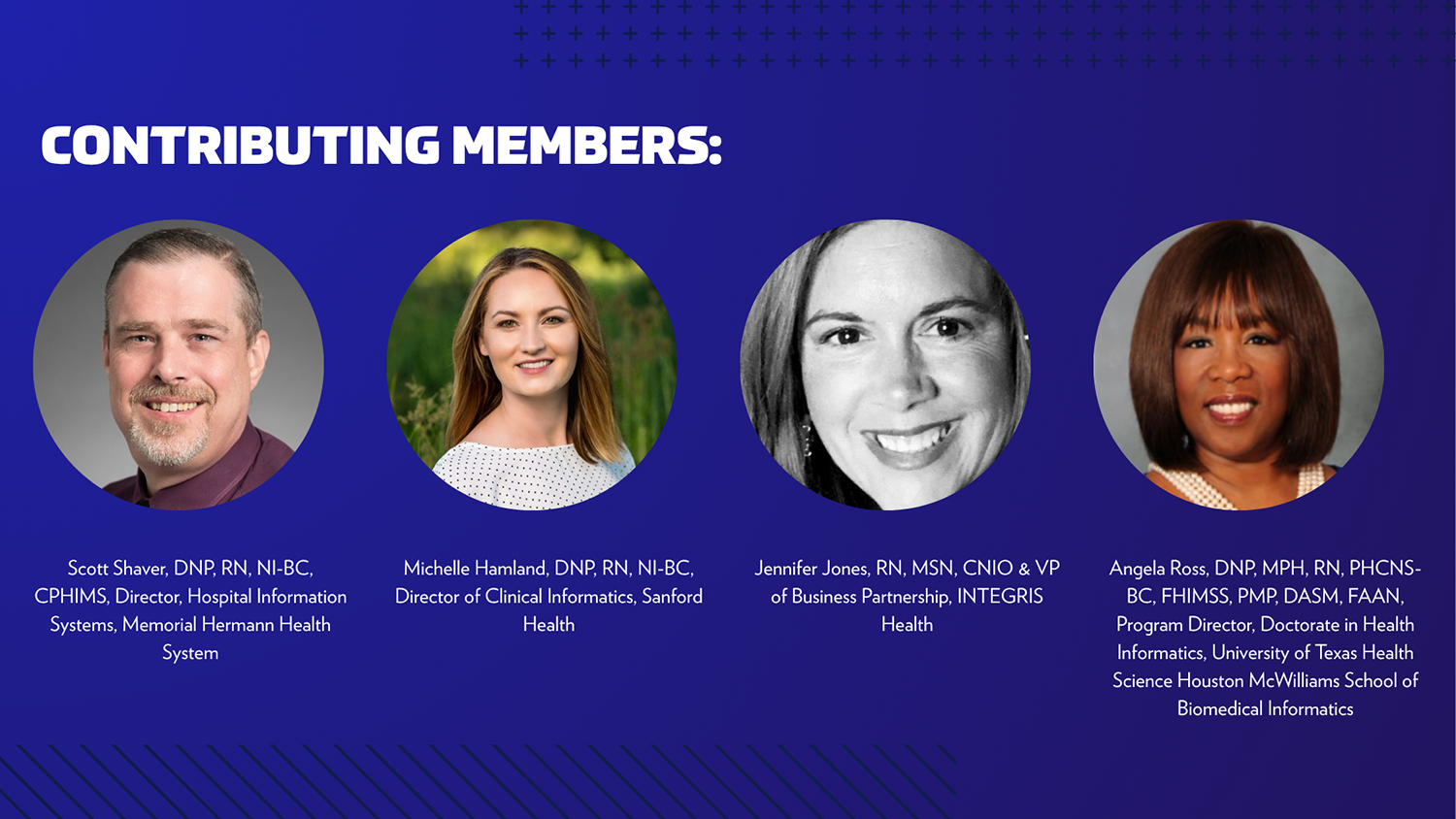
Why is nursing informatics essential for the success of digital transformation in healthcare?
Scott: Nursing informatics is essential to the success of digital transformation in healthcare because it ensures that technology is effectively integrated into clinical practice in ways that support end‑users, enhance care delivery, and improve patient outcomes. Nursing informaticists serve as the critical link between computer science, information science, and nursing science, translating technical systems into practical tools that nurses and clinicians can safely and efficiently use.
Nursing informaticists collaborate with IT teams and vendors to ensure system functionality aligns with clinical requirements. They participate in system design, testing, optimization, and upgrades, helping to identify usability issues and unintended consequences before technology is implemented broadly. Without this clinical–technical expertise, digital tools risk being technically advanced but poorly suited to real‑world care environments.
Nursing informaticists apply principles of data standardization, information flow, and knowledge management to ensure that clinical data are accurate, meaningful, and reusable. By supporting standardized terminologies and structured documentation, they help transform raw data into actionable clinical knowledge. This enables decision support, analytics, reporting, and regulatory compliance: core components of successful digital transformation.
Michelle: Nursing informatics is about translating how we care for patients into solutions that actually work in practice, not just in the EHR, but across all the technologies we use every day.
As nurses, we understand what it takes to deliver safe, high-quality care. Informatics helps connect our workflows, tools, and information in a way that supports us at the bedside, making care more efficient, more coordinated, and ultimately better for our patients.
Jennifer: Nursing informatics is essential to successful digital transformation in healthcare because it connects clinical care with technology in a way that is practical, usable, and outcome driven. By translating real-world workflows into systems like Epic, informatics ensures that digital tools support, not disrupt, care delivery. It drives caregiver adoption through workflow alignment, training, and change management, while also improving patient safety through standardized practices and clinical decision support. Additionally, it enables data integrity and actionable insights, bridging bedside care with strategic goals across the organization. As a core component of Clinical Informatics, nursing informatics ensures that digital transformation results in measurable improvements in quality, efficiency, and experience, turning technology investments into real clinical and operational value.
Angela: Nurses are at the bedside around the clock, and they are the heartbeat of every digital system we build in healthcare. Digital transformation is the work of the HIMSS community, and nurses are central to whether that work succeeds or stalls. You cannot transform what you do not understand, and no one understands the rhythm of patient care the way nurses do. Nursing informatics is where clinical wisdom meets technology, turning data into safer care, smarter workflows, and better outcomes. But transformation does not happen by accident. It happens when we build an informatics ready nursing workforce through education that begins in prelicensure programs and continues across every stage of a nurse’s career. That means every nurse, not just those with informatics in their title. From the new graduate to the seasoned bedside expert to the executive leader, informatics fluency must become a core competency of modern nursing practice. Without that investment, digital transformation is just software. With it, transformation becomes real, human, and lasting.
In your experience, how does empowering nurses to lead informatics initiatives strengthen healthcare delivery and patient safety?
Scott: By ensuring that solutions are clinically relevant, nurse‑centered, and aligned with frontline nursing care processes. Nurses are the largest group of healthcare professionals and the primary users of clinical information systems; when they are empowered to lead informatics efforts, technology becomes a tool that supports care rather than a barrier to it.
Michelle: As nurses, we are natural advocates, not only for our patients, but for how care is delivered. We advocate for strategies that align across the entire care team because we see firsthand how connected and coordinated care impacts outcomes. When nurses are leading or involved in informatics work, the solutions are more meaningful, more realistic, and better support safe, high-quality patient care.
Jennifer: Because nurses are closest to patient care, they can identify safety risks early and optimize processes through better documentation, decision support, and standardization. Grounded in Clinical Informatics, this approach improves data quality and creates a continuous feedback loop that enhances patient outcomes, safety, and overall care delivery.
Angela: When nurses lead, care gets better. Period. Nurses see what others miss: the workaround on the night shift, the alert that gets ignored, the handoff where information falls through the cracks. When we empower them to design the systems they use, we get technology that actually works at the bedside, not just in a boardroom. But empowerment requires preparation, and preparation cannot be reserved for a small group of specialists. I remember telling a nurse once that she was already a project manager. She looked at me, surprised. I gave her the definition, and she agreed that it described exactly what she did every shift. Today, she is a certified Project Manager leading initiatives in a health system, bringing nursing and project management together to drive real change. That is what happens when we help nurses see the skills they already have and provide the education to develop them. As an educator, I see every day how reskilling and upskilling the entire nursing workforce in informatics, data literacy, and emerging technologies unlocks their ability to lead transformation from wherever they stand. Every nurse is an informatics user, and with the right education, every nurse can be an informatics leader. That is how we build a healthcare system that is not only more efficient, but more humane.
What message would you share with healthcare leaders about the importance of including nurses in shaping AI, digital health solutions, and policy decisions?
Scott: Nurses should be included from the beginning in shaping any technology decision, especially frontline nurses with current patient‑care experience. Their involvement ensures AI, digital health solutions, and policies are clinically relevant, ethically grounded, and safe in real‑world practice, while driving adoption, reducing unintended risks, and ultimately improving patient outcomes and care quality.
Michelle: As AI and digital health continue to evolve, it is critical that nurses are part of shaping what comes next.
Nurses bring a deep understanding of patient care, workflows, and what it really takes to make care safe and effective. When nurses are included in these decisions, we create solutions that truly support clinical practice, improve outcomes, and make a meaningful difference for both patients and care teams.
Jennifer: Healthcare leaders must intentionally include nurses in shaping policy, AI, and digital health solutions because they bring the most comprehensive, real-time understanding of how care is actually delivered. Nurses are at the intersection of patient experience, clinical workflows, and system constraints, which makes their input essential to designing policies and technologies that are safe, equitable, and implementable. In AI and digital solutions, especially within systems like EMR, nurse involvement helps prevent unintended consequences such as bias, alert fatigue, and workflow disruption, while improving usability and adoption. Grounded in Clinical Informatics, nurses ensure data is captured accurately and reflects the realities of care, which is critical for reliable AI and decision-making. Without their voice, organizations risk creating policies and technologies that are disconnected from practice; with them, they build solutions that are safer, more effective, and truly transformative.
Angela: Stop inviting nurses to the table after the decisions have been made. Invite them to build the table. Nurses hold the clinical, operational, and human insight that determines whether AI and digital health tools will save lives or simply add noise. But inclusion without investment is not enough. Leaders must commit to developing the nursing workforce of the future by funding informatics education for all nurses, not only those pursuing specialty roles. Reskilling and upskilling must become standard practice across the profession, from prelicensure curricula to continuing education for the most experienced clinicians. This is where the HIMSS community can lead, partnering with nurse leaders, educators, and health systems to advance the digital fluency of the entire nursing workforce. Every policy written without nursing input is a missed opportunity, and every algorithm deployed without a digitally fluent nursing workforce is a risk. If you are serious about the future of healthcare, put nurses at the center of it, and give every one of them the education and tools to lead it.
One word to describe the future of nursing:
Scott: Resilient
Michelle: Transformational
Jennifer: Transformational
Angela: Boundless
The biggest challenge for nurses in the next 5 years and how we can address it:
Scott: The biggest challenge for nurses over the next five years will be sustaining the workforce amid burnout while adapting to rapid technological change; addressing it will require investing in nurse‑led technology design, supportive staffing models, and education that helps nurses use technology to reduce burden rather than add to it.
Michelle: One of the biggest challenges will be moving beyond care models originally designed for paper, which still influence many of our workflows and informatics strategies today.
We have an opportunity to re-envision nursing practice by leveraging technology and AI to reduce task-driven workflows and documentation burden, allowing nurses to spend less time working through tasks and more time thinking critically, coordinating care, and leading patient care.
Jennifer: The biggest challenge for nurses in the next five years will be managing increasing workload and complexity from AI, digital tools, and ongoing staffing shortages amid high burnout and turnover. Addressing this requires co-designing solutions with nurses, strengthening safe staffing and flexible care models, and ensuring technologies, grounded in Clinical Informatics, simplify workflows, reduce burden, and truly support care delivery.
Angela: The biggest challenge will be preparing every nurse, not just informatics specialists, to thrive amid rising complexity and rapid technological change. We meet this moment by embedding informatics into nursing education from day one, expanding reskilling and upskilling pathways across the entire career lifespan, and designing technology that lifts the burden off nurses rather than piling more onto them.
Interested in getting involved? We invite you to join the HIMSS Nursing Informatics Community and connect with peers who are shaping the future of digital health. To learn more or get engaged, please reach out to nursinginformatics@himss.org