The Rise of the Human-Robot Care Team

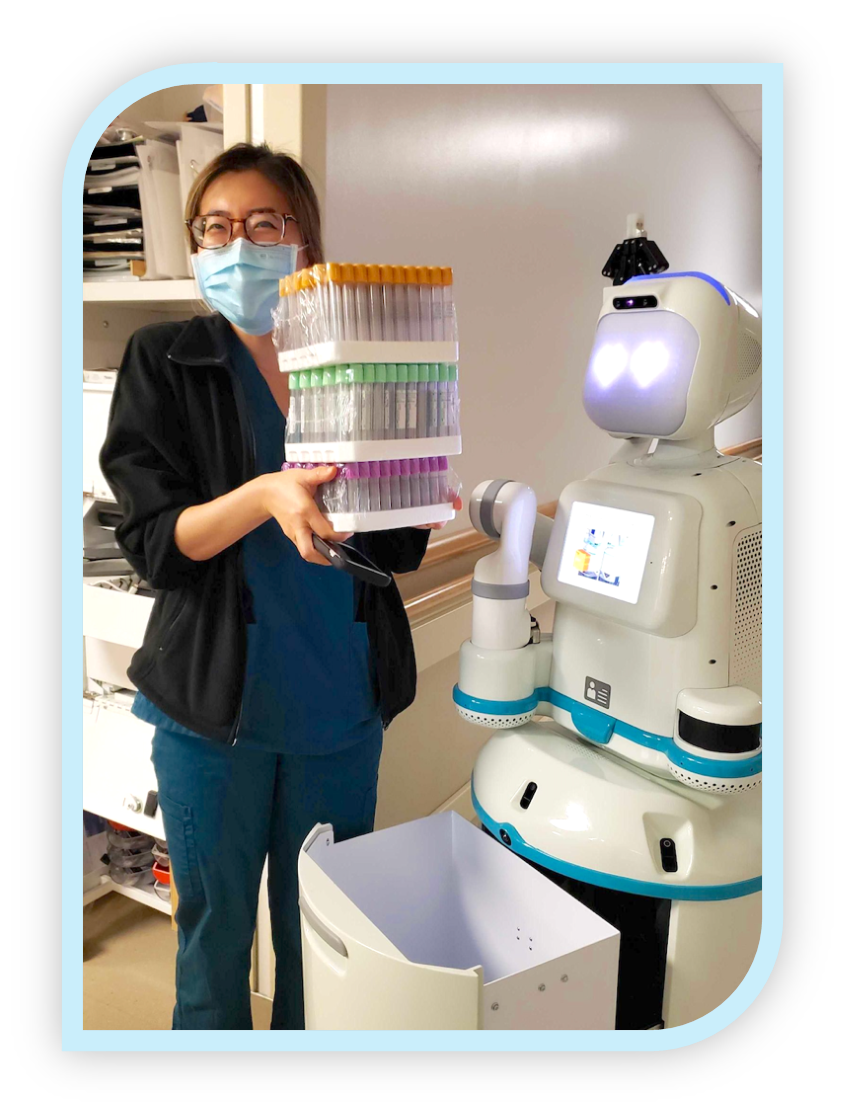
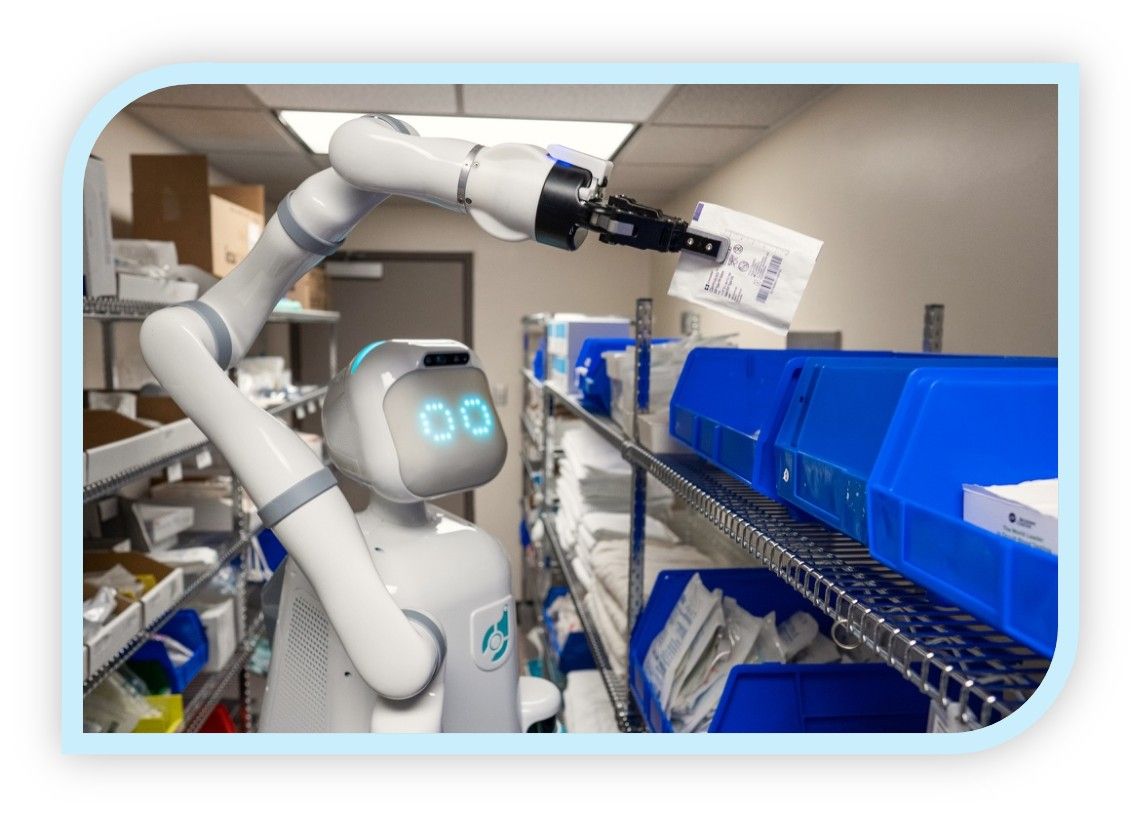
Walk into certain hospitals today and you might notice something unexpected. A cart glides past you, not pushed by a nurse or a volunteer, but by a friendly-faced, semi-humanoid robot. It pauses, waits for you to pass, then heads toward the elevator, summoning it without pressing a button. Later, you see the same robot delivering lab samples, carrying medications, or even picking up supplies from one wing of the hospital and delivering them to another.
If you are a patient, you might smile and wave. If you are staff, you might feel relief, one less errand to run during a packed shift.
This is Moxi, an autonomous service robot created by Diligent Robotics, and it’s one example of how generative AI (GenAI), robotics, and humanoid systems are no longer “future possibilities” in healthcare. They are present-tense teammates, changing not just how work gets done but also what work exists at all.
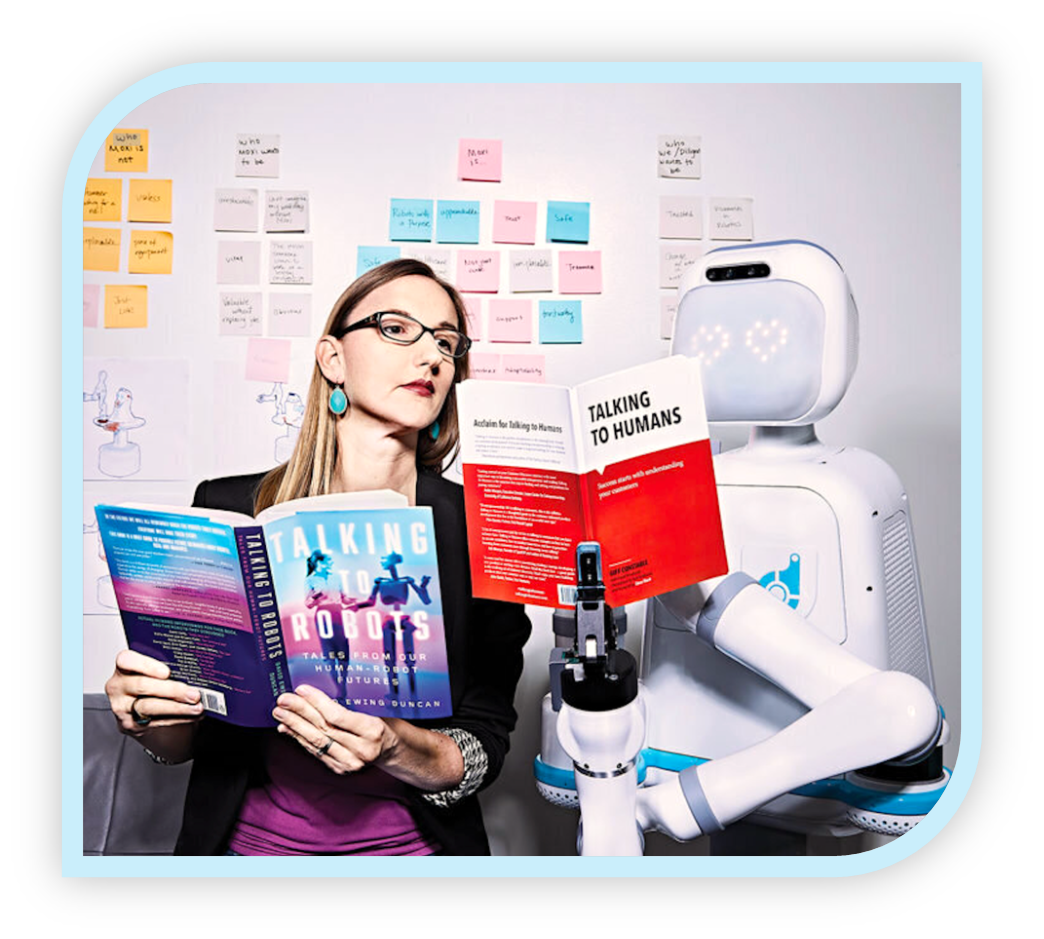
To explore this shift, I spoke with Andrea Thomaz, co-founder and CEO of Diligent Robotics. Thomaz has spent her career studying how people interact with robots and how technology can be designed for trust, comfort, and collaboration. Her insights offer a front-row view of how healthcare jobs, skills, and workforce structures are evolving in real time.
A New Layer of Work Inside the Hospital
When Diligent Robotics first deployed Moxi, the focus was on helping care teams reclaim time by offloading non-patient-facing tasks—delivering supplies, running lab samples, transporting medications. What emerged was something bigger: entirely new categories of work. “As our fleet grows, more than 100 robots in over 30 health systems nationwide, there’s a need for people who coordinate, integrate, and ensure the technology is delivering value,” Thomaz says.
That means roles like:
- Automation Success Managers – looking at workflow data and spotting new opportunities for automation.
- Clinical Robotics Integration Leads – embedding robotics into clinical workflows and ensuring they support patient care, not disrupt it.
- Customer Success Managers – acting as the relationship bridge between hospital staff and robotics vendors.
- Robot Operations Coordinators – managing schedules, resolving hiccups, keeping robots aligned with hospital priorities.
-
On the engineering side, demand is rising for autonomy engineers, robotics deployment engineers, and machine learning specialists, roles dedicated to making sure robots like Moxi can operate safely in people-dense, high-acuity environments.
At the same time, existing positions are shifting. Nurses, pharmacists, and support staff are increasingly freed from time-consuming logistics to focus on direct patient care. For many, this is a welcome change but it does require learning how to collaborate with a teammate that runs on sensors and software.
-
The Skills That Matter Most
Thomaz doesn’t hesitate when I ask about the number-one skill for this new era: adaptability.
“You don’t have to be a robotics expert,” she says. “But you do need to be open to new tools and ways of working, confident enough to collaborate with a robot.”
That confidence comes from hands-on, in-context training. Diligent sends Clinical Robot Associates into hospitals during deployments to work side by side with staff. These associates walk teams through what the robot can do, what it can’t, and how to adjust workflows so that Moxi becomes part of the natural rhythm of care.
Soft skills, long valued in healthcare, are taking on new dimensions:
- Communication now includes conveying information between human and robotic teammates.
- Workflow awareness means knowing when to hand off a task to a robot and when to take it back.
- Task coordination is about managing smooth transitions between human care and automated support.
For those aiming at more technical roles, the opportunities are growing. Skills in real-time systems, robotics deployment, and human-robot interaction are rare and increasingly in demand. Hospitals, vendors, and research organizations all need professionals who can make automation work in messy, unpredictable, real-world settings.
-
Trust Before Technology
One of the most striking themes in our conversation is that success with humanoid systems doesn’t start with hardware or code, it starts with people. “The most successful rollouts happen when staff feel involved early,” Thomaz says. “Answer their questions, explain how the robot supports their work, and show that it’s here to help not replace them.”
Hospitals that approach integration as a cultural shift tend to see faster adoption. Staff give robots names. They decorate them for holidays. Some units even present “Employee of the Week” awards to Moxi. These lighthearted gestures reflect something deeper, trust, ownership, and acceptance.
Organizations can also lean on innovation champions, those naturally curious, tech-positive staff members who can lead by example. Champions often become the first to try new workflows, the ones answering colleagues’ questions in the break room, and the people who turn early skepticism into enthusiasm.
-
A Continuous Conversation
Scaling robotics in healthcare is not just about deploying more units; it is about building the human systems around them. Diligent Robotics has had to grow its own team in new directions, adding roles in robot operations, customer success, clinical integration, and robotics deployment. These positions translate between hospital staff and engineering teams, making sure the technology is adding value rather than complexity.
On the technical side, the company continues to invest in expertise for mobile manipulation, machine learning, and real-time decision-making, skills essential for operating safely in busy hallways and patient care areas.
But for Thomaz, workforce development also means storytelling. “We make time to share stories from the field, those moments when Moxi saved a nurse an hour in their shift, or helped a lab avoid a backlog. When people see the human impact, they understand the mission.”
This approach turns workforce development into an ongoing conversation, with hospital partners, internal teams, and the wider healthcare community, about how to keep building the future of work together.
Who Owns the Robotics Roles?
Interestingly, most robotics-specific positions still reside on Diligent’s side of the partnership, not within hospitals themselves. Under their Robot-as-a-Service (RaaS) model, hospitals handle basic care like cleaning and light maintenance, while Diligent manages all other servicing.
That means:
- HQ-based engineering roles: autonomy engineers, robotics deployment engineers, machine learning specialists.
- Hospital-based operational roles: robot operations coordinators, clinical robotics integration leads, customer success managers, automation success managers.
This model allows hospitals to benefit from robotics without needing to build large in-house technical teams. Yet, it still creates career opportunities for staff who want to be part of the robotics integration process.
For Students and Early-Career Professionals
For those just starting out in healthcare IT or clinical operations, the implications are exciting. The convergence of GenAI, robotics, and humanoid systems means career paths that didn’t exist five years ago are now open and growing fast.
Top 5 Emerging Healthcare Robotics Roles
- Automation Success Manager. Focuses on workflow optimization, identifying new opportunities for automation and tracking performance against clinical goals.
- Clinical Robot Associate. Provides hands-on training and support during deployments, ensuring robots are seamlessly adopted into daily operations.
- Clinical Robotics Integration Lead. Works directly with care teams to align robotics capabilities with patient care priorities, helping staff make the most of automation.
- Customer Success Manager. Acts as the relationship bridge between hospitals and robotics vendors, driving adoption, training, and long-term value from the technology.
- Robot Operations Coordinator. Keeps the hospital’s robotic fleet running day-to-day, overseeing schedules, troubleshooting, and ensuring smooth integration into clinical workflows.
Resources: 3 Real-World Job Descriptions
- Client Success Manager.pdf
- Clinical Robot Associate.pdf
- Implementation Service Technician.pdf
-
Students who combine healthcare knowledge with technical literacy will be positioned to bridge the gap between frontline care and emerging technology. That doesn’t mean every nurse needs to become a coder, but it does mean understanding how intelligent systems work, where they add value, and how to adapt when workflows evolve.
Early-career professionals can also focus on transferable skills—adaptability, communication, data interpretation—that will be relevant no matter how technology evolves. Those who are comfortable managing both human and machine team members will have a competitive advantage.
-
Looking Ahead: The Human-Machine Team
Healthcare is entering an era where “teamwork” means something new. Your teammate might have wheels instead of legs. They might never call in sick, but they will also rely on you to set priorities, adjust to the unexpected, and keep care human.
“The goal isn’t to replace clinical judgment,” Thomaz says. “It’s to create systems where automation and human insight work together.”
That vision requires not just technical innovation, but also cultural openness, thoughtful workforce planning, and ongoing skill development. For everyone, from students just choosing a career path to executives planning long-term workforce strategy, the message is clear: the future is already here, and the professionals who learn to collaborate, communicate, and lead in human + machine teams will shape healthcare’s next chapter.
If you are curious about where embodied AI is taking healthcare next, connect with me on LinkedIn and read my new article, “The Omnioid Era.”